History
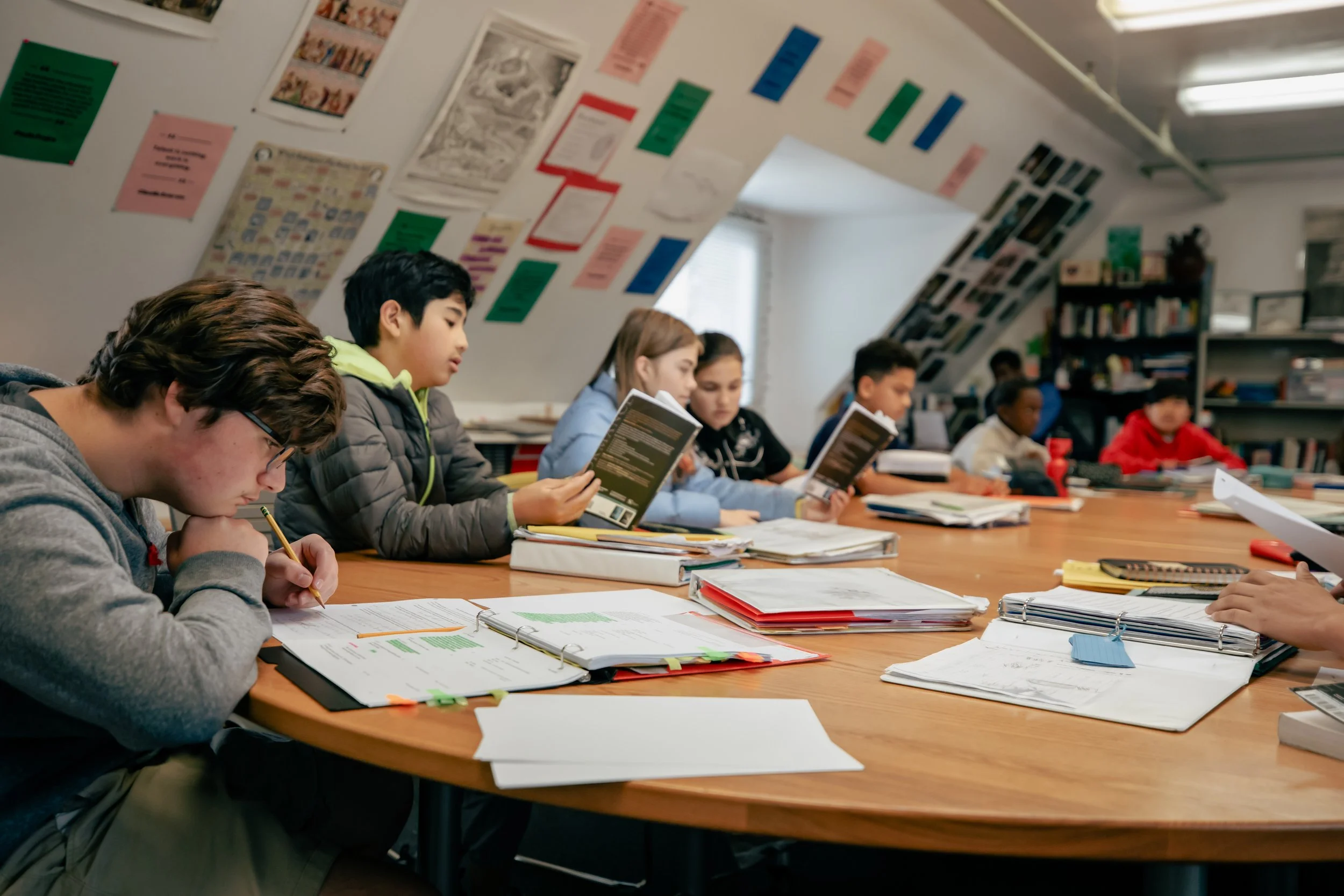
Our students read primary sources almost exclusively.
Three years, one continuous world history course. Sixth grade takes ancient civilizations, seventh grade the medieval world, eighth grade the sixteenth century through the twentieth.
What they read
Ancient epics. Canonical works of history, philosophy, and politics. Sacred texts from the major world religions. Documentary sources from every part of the world.
No textbook does what these do. Reading real people in their own words holds a child’s attention in a way a summary never will, and a student who wants to know what happened will work through a hard text to find out. Sixth graders follow Rama’s rescue of Sita in the Ramayana. Seventh graders follow knights risking their lives in The Song of Roland. Eighth graders follow the Allied march to victory.
They are reading material usually assigned in high school and college. They mostly don’t notice, because they are following the story.
Discussion
Socratic inquiry is the daily method. On most days students are defending or attacking the decisions of people in the past, in front of classmates who read the same page. They learn to state a position clearly, to listen, to ask a good question, and to change their mind when someone else is right.
Writing
Every unit ends with an academic writing project. Sixth graders learn to build a single paragraph around a claim, supported by evidence from the source. By eighth grade they are writing full essays drawing on primary sources and the class reference library.
The writing happens at school. We run collaborative workshops during class time rather than sending the hard part home, so students can help each other and get individual instruction while they are actually working. The process is broken into short exercises with plenty of room to revise.
Research
We keep a reference library of historical maps, encyclopedias, and university-level textbooks, and students use those alongside online sources. Textbooks have a place here. They just don’t have the leading role they usually play in a middle school classroom.
Students learn to build a timeline, identify the defining events of a period, judge whether a source is authoritative, and construct an argument from evidence. Those are twenty-first-century research skills, and they belong to a classical education rather than being bolted onto one.