SCIENCE
The lab
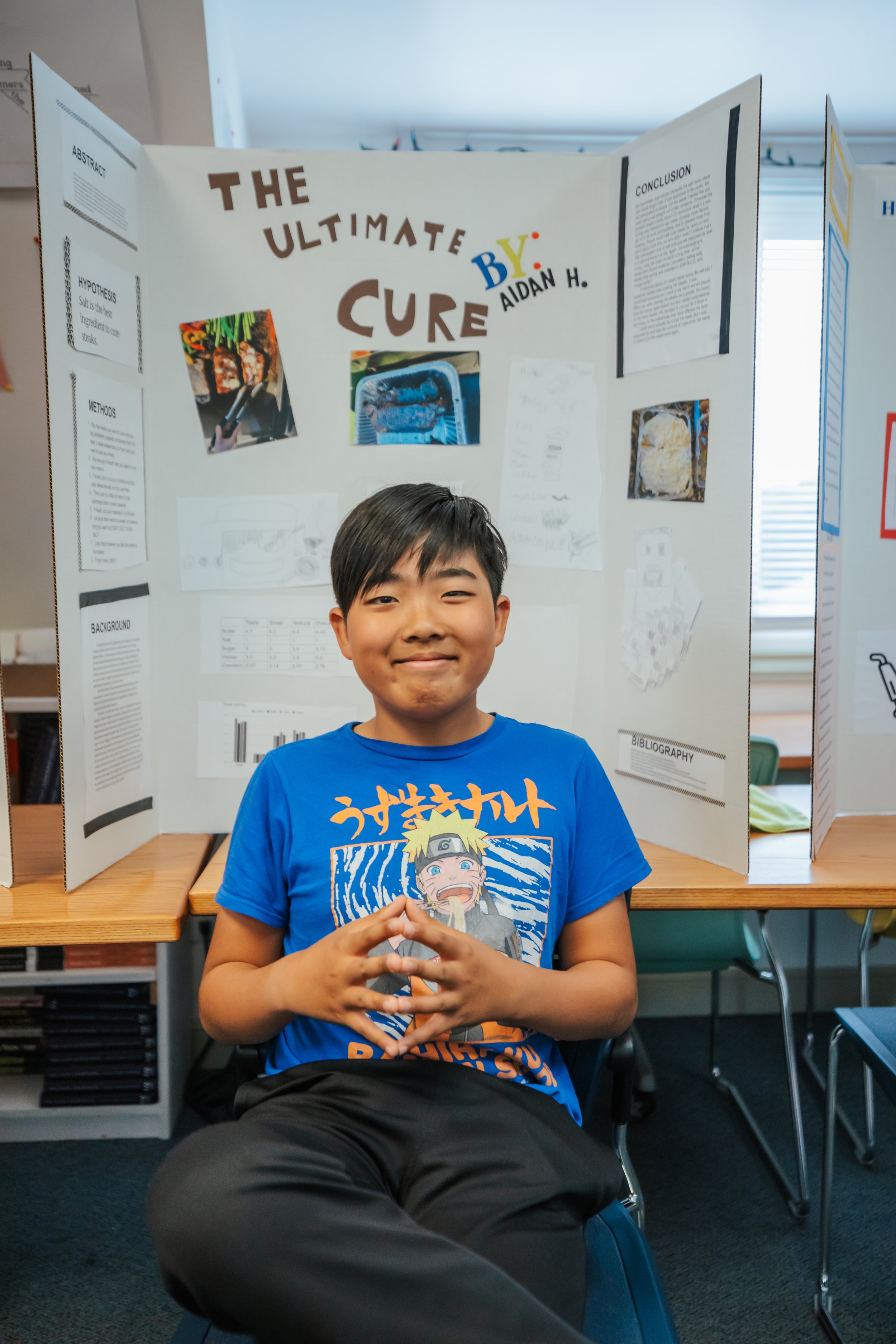
Real experiments, with real equipment, that can fail. A student who runs a procedure carefully and gets a result that contradicts the textbook has to figure out which part is wrong: the procedure, the reasoning, or the assumption. That is not a bad day in the lab. That is the lesson.
We do not run confirmation exercises where everyone already knows how it ends. Students learn to design a test, control what needs controlling, record what actually happened rather than what was supposed to happen, and say what the data does and does not support.
Argument from evidence
In their history seminar, students argue with a text. In science they argue with the world, and the world does not care how well anyone makes their case.
The habit is the same one running through the whole upper school. Make a claim. Point to what supports it. Be willing to be wrong in front of people. Science is where that habit meets the least forgiving judge a thirteen-year-old will encounter, which is exactly why it belongs next to the seminar and the debate team.
Math that means something
Students use the mathematics they are learning down the hall. Graphing real data, working with units, estimating error, noticing when a number is not physically possible. Science is where math stops being a subject and becomes a tool.
Why a classical school takes science seriously
Families sometimes assume that a school built on Latin and close reading treats science as the other thing it also offers. The opposite is true.
Reading primary sources means going to what someone actually wrote rather than a summary of it. Doing science means going to what actually happens rather than a description of it. It is the same commitment applied to a different kind of evidence, and a school that took one seriously and not the other would not be doing either one properly.