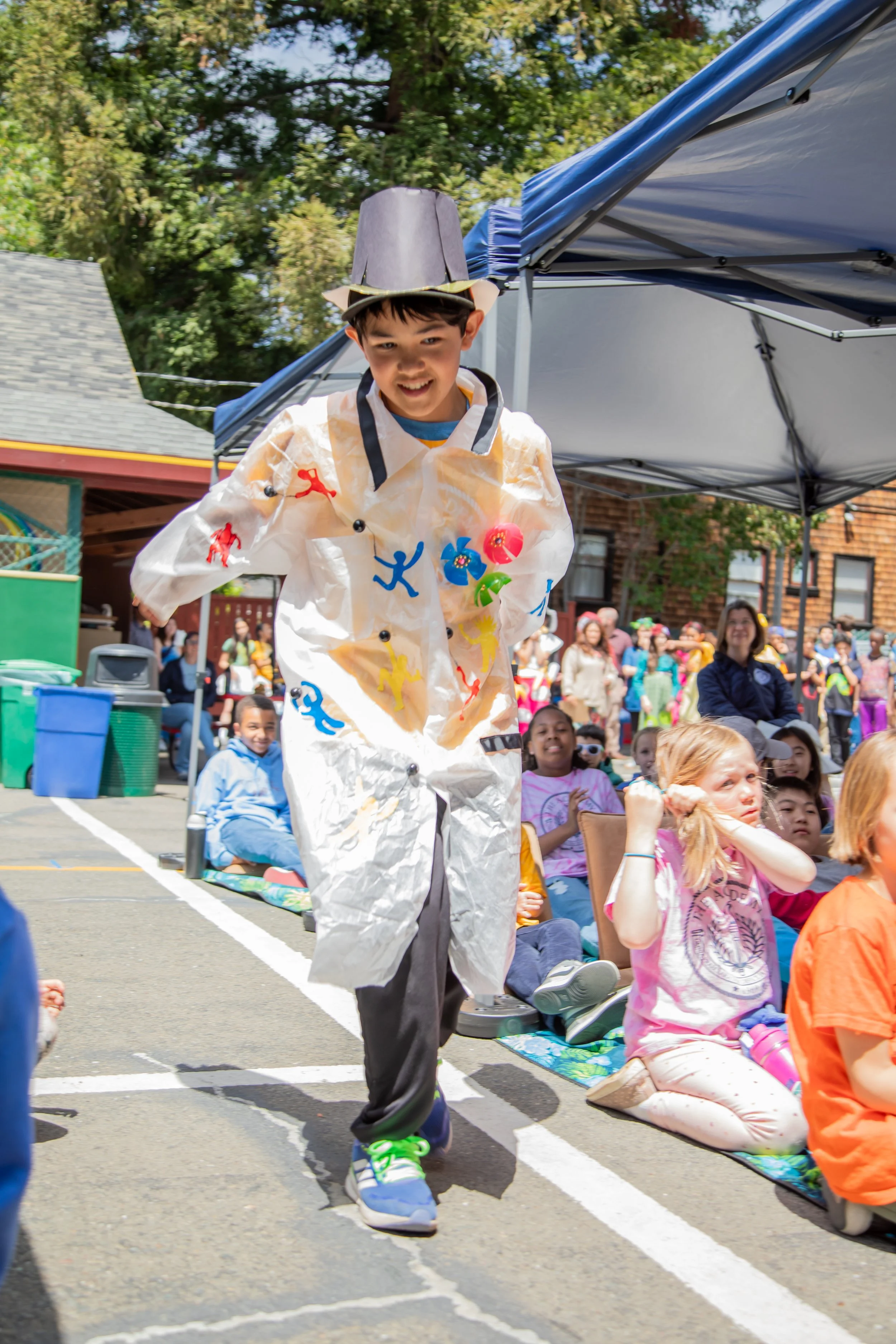
Art and Art History
Every Upper School student takes art. Studio practice and art history in the same class, with the same teacher, all three years.
Why the two run together
A student who has looked closely at how someone solved a problem four hundred years ago approaches their own paper differently. They stop asking whether their work looks good and start asking what it is doing. That shift is most of the education, and middle school is exactly when a child becomes capable of it.
It also means art carries content. Students learn periods, movements, techniques, and the arguments artists were having with each other. When an eighth grader in history reads a primary source from the sixteenth century, they know what was being painted that year. When a sixth grader studies ancient civilizations, they have looked at the objects those civilizations left behind.
The work
Drawing, painting, printmaking, engraving, and sculpture, extending into the makers space where screenprinting, the laser cutter, and 3D printers are available.
Projects run longer than they did in the Lower School, often several weeks. Sustaining an idea past the point where it stops being fun is a skill, and this is the age to practice it.
The critique
Upper School students learn to talk about work, including their own. They describe what is actually on the page rather than whether they like it, and they hear the same done to theirs.
This is the same thing happening in their history seminar and on the debate team, moved into a room where the evidence is visual. Make a claim about what you see. Point to the thing that supports it. Be willing to be wrong in front of people.
What we are after
Not artists, necessarily. People who can look at something closely and say what they see, which turns out to be the same skill that makes a good reader.