
Kindergarten
"Everything is new, and everything is worth touching. We meet five-year-olds where they live: in wonder, in play, in the first thrill of literacy."
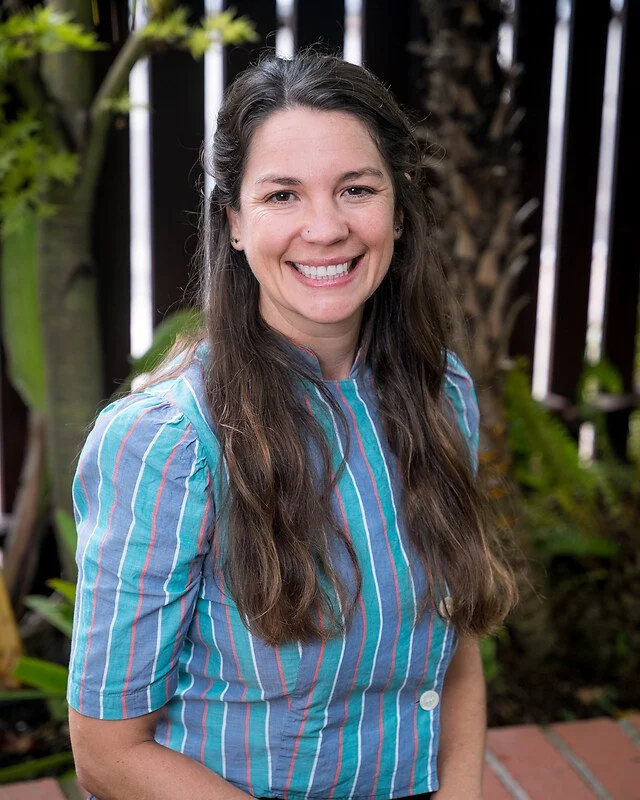
Megan Littlefield
Kindergarten Teacher & Lower-School Dean
-
Kindergarten is where a child first learns that school is a place for their own questions. In Ms. Littlefield’s full-day class, five-year-olds share ideas, interview one another, predict and check the weather, report the calendar, count, read, and recite songs and poems, and the subjects flow into one another all day long. Each day one child serves as class reporter, so that everyone has a turn at leading. Through a balance of small-group and individual work the children learn to think for themselves and to care for one another, and everything that follows in their schooling rests on those two things.
-
Reading: Children read daily in reading clubs, small guided groups in which Ms. Littlefield teaches phonics and phonemic awareness, high-frequency and sight words, comprehension and fluency, listening, the difference between fiction and nonfiction, and the retelling of a story. They read aloud and silently, and they sing poems and songs. The aim is skill joined to joy.
Writing: Kindergarteners write every day. Each week brings two new high-frequency words, practiced daily and tested at the week’s end, and the words return throughout the year. Children work at forming letters and holding a pencil correctly: they sign their names, copy sentences from the board, and write numbers and words in every subject. When they write their own stories, spelling and grammar go uncorrected, because at that moment the task is to get an idea onto paper and to discover that they have a voice.
-
Mathematics begins in the world around the child. Ms. Littlefield draws problems from daily life and shows more than one path to a solution. By the year’s end children count and recognize numbers to one hundred, add and subtract, solve story problems, find patterns, try early algebraic exercises, count coins, tell time to the half hour, and measure.
-
Social studies is woven through the day: the calendar and its holidays, thematic units, events in the wider world, and lessons about cultures brought to class by our own families.